- Section
- Retail & Distribution
- Published
- 4 min read
- By Nathan Brooks
Retail & Distribution
Oh My Mahjong Went From $1 Million to $40 Million in Two Years
Oh My Mahjump grew from $1 million to $40 million in two years, sells a mat every 10 seconds, and retailers like Jonathan Adler can't keep sets in stock.
At a glance
- Oh My Mahjong grew from $1 million in 2023 sales to $40 million in 2025 and has surpassed that in 2026.
- Google searches for 'mahjong' are up 70% year over year in the U.S. and 50% globally since 2021.
- Jonathan Adler's $695 mahjong sets, launched in 2025, are its fastest-growing games category and keep selling out.
- The mahjong subreddit draws 37,000 weekly visitors; over 150,000 TikTok posts use #mahjong.
- U.S. tariffs on China hit triple-digit percentages in 2025, raising costs for tile makers.
Oh My Mahjong generated $1 million in sales in 2023. In 2025, that number hit $40 million — a fortyfold jump in two years — and the brand has already surpassed it in 2026. "There was nothing in the market like there is now," founder and CEO Megan Trottier said. "Now, everywhere you look, there's something mahjong."
Trottier learned mahjong roughly 20 years ago from a college roommate, rediscovered the game during Covid, and started Oh My Mahjong from her Dallas garage in 2022 with colorful designer mats and storage bags. Today the company sells a mat every 10 seconds, holds 2,000-plus retail doors, and counts Bloomingdale's, Neiman Marcus and Tuckernuck as wholesale partners. The business splits 60% DTC, 40% wholesale.
Why is a 19th-century game booming now?
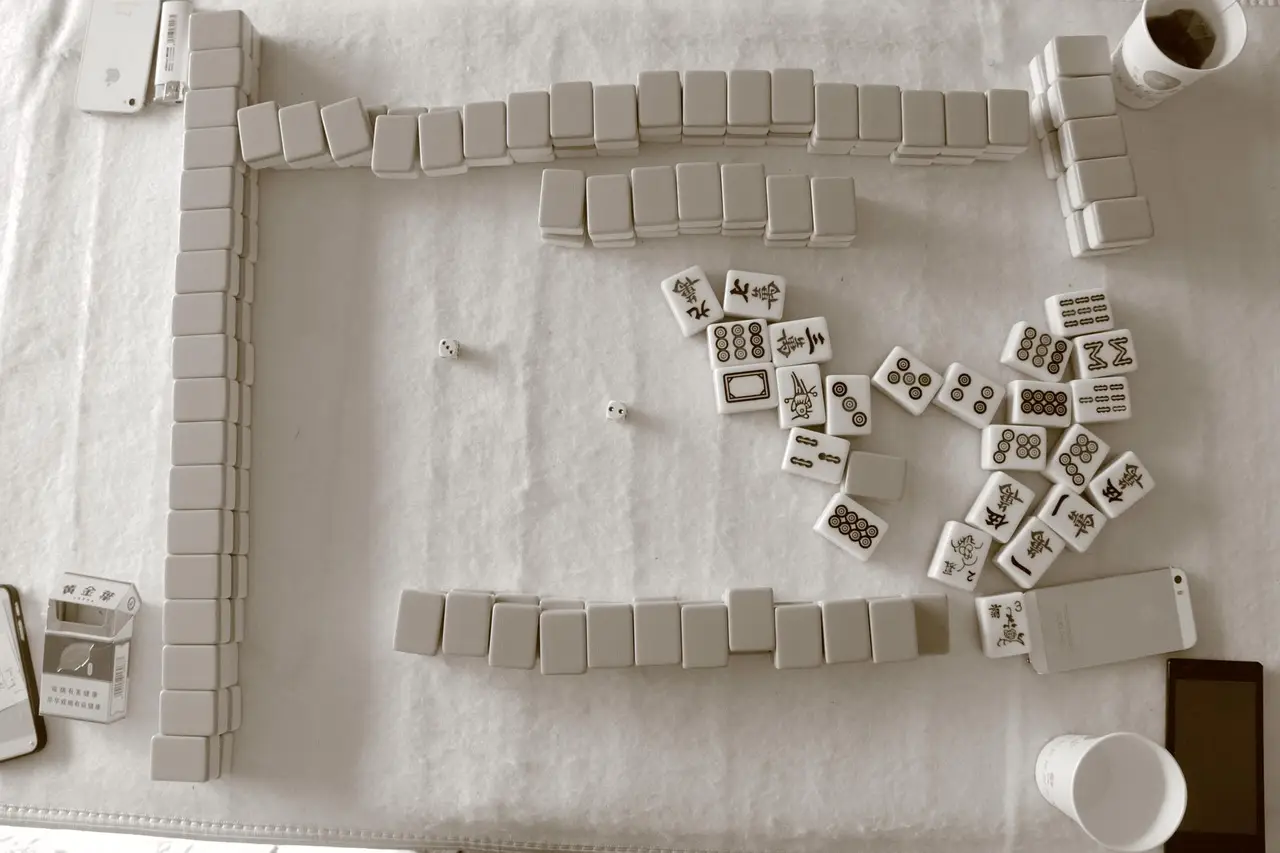
The game, which blends luck and skill, originated in China in the 1800s and reached the U.S. and Europe in the 1900s. Google searches for "mahjong" are up 70% year over year in the U.S. and up 50% globally since 2021, per Google Trends. Trottier credits the analog revival. "I think we live in such a digital world that people crave connection," she said. "[Mahjong] forces you to put your phone down. It forces you to find three people to play with. It forces you to use your brain."
The social footprint backs her up. The mahjong subreddit draws 37,000 weekly visitors, and more than 150,000 TikTok posts carry the hashtag #mahjong. One TikToker's video of her mother recounting "mahjong drama at her retirement home" drew over 200,000 likes. Hotels have noticed: The St. Regis New York launched Mahjong Mondays last summer and sold out weekly, per Forbes. Hotel Bel-Air in Los Angeles started a monthly American Mahjong series last September using Oh My Mahjong tiles; Hotel Crescent Court in Dallas runs "Tiles and Tinis" events every six weeks.
What does the demand look like at retail?
Jonathan Adler introduced mahjong sets in 2025 — a year in development — priced at $695, with lower-priced sets and mats at Michaels. Mahjong is now the fastest-growing games category at the home brand. "Our biggest challenge has been keeping [the sets] in stock," president Alison Bergen said. "I don't even see our full demand. This summer, everything was sold [out] by the time it landed because we have pre-orders from wholesale customers."
No price resistance either, apparently. The brand's Jacques Game Table, useful for mahjong, retails at $2,350 and ranks among its bestsellers. Bergen said customers buy the sets as decor as much as games, and Jonathan Adler is now eyeing mahjong-themed pillows and drinkware. "Games aren't just about games," Bergen said. "What's she serving at game night? What's on the plate? What's the table? We're kind of building a universe … around entertainment."
The distribution base has widened beyond specialty retail. Anthropologie, Urban Outfitters, Crate & Barrel, West Elm, Hot Topic, Walmart, Amazon and even Temu sell sets or accessories, and mahjong-adjacent merch — socks from Sock Candy, beaded bags from Ink + Alloy, playing cards from REI — keeps multiplying. Oh My Mahjong's limited editions feed the collector instinct: an early-October collaboration with LoveShackFancy sold out in under five minutes, and the brand's thousands of Mahji Mentorship teachers hoard seasonal mats and tiles. "Some of our teachers have 20 tile [sets]," Trottier said.
New players keep arriving. Rachel Canowitz, an HR professional in New York, learned from her grandmother in December and bought a $70 set on Amazon in August. "I really enjoy the strategy," she said. "It's super satisfying to win, because it feels like such an uphill battle."
What could slow it down?
Tariffs and macro uncertainty, mainly. Jonathan Adler makes its tiles in China, where U.S. tariffs hit triple-digit percentages in 2025, and Oh My Mahjong — which produces acrylic tiles overseas — raised prices that year amid rising manufacturing costs. The situation has since stabilized, Trottier said. "It doesn't seem to be that crazy of an environment of stuff changing on the daily."
With Uncommon Goods and Ink + Alloy already pushing mahjong holiday gifts before November, and Oh My Mahjong shipping Christmas mats and mahjong-themed ornaments alongside a new player-matching app and an 80,000-square-foot Texas warehouse, the category enters 2027 with momentum. "[Mahjong accessories] is an emerging market, so it's not like there's a playbook on how to do it," Trottier said. "We're building it as we go."
Original: time.com
More from Nathan Brooks
Show full bio
Market editor covering companies, deals and strategy in trade marketing, shopper marketing, trade promotions, category management at Target Marketing.
91 articles
Related articles
| September 22, 2026 | Label Clips Jumped 606% on Shopify in August |
| October 20, 2026 | Walmart Bundles Walmart+ and Sam's Club Plus for $120 a Year |
| October 22, 2026 | Beyond Yoga Will Make Its New York Stay Permanent — and It'll Be Yellow |
| October 26, 2026 | Genre Bookstores Are Winning on Depth: 600-Plus New Indies Opened |
| October 13, 2026 | AI Is Rewiring Young Shoppers' Brains, Retail Analysts Warn |